Soil compaction is one of the leading causes of tree decline in urban settings. When soil is heavily packed—due to construction, heavy equipment, or foot traffic—the microscopic pore spaces that roots rely on for oxygen and water are eliminated. This leads to starving, stressed roots and a weakened tree.
Vertical Mulching is a deep-reaching technique that directly addresses this problem, improving the soil structure and boosting the long-term health of your high-value trees.
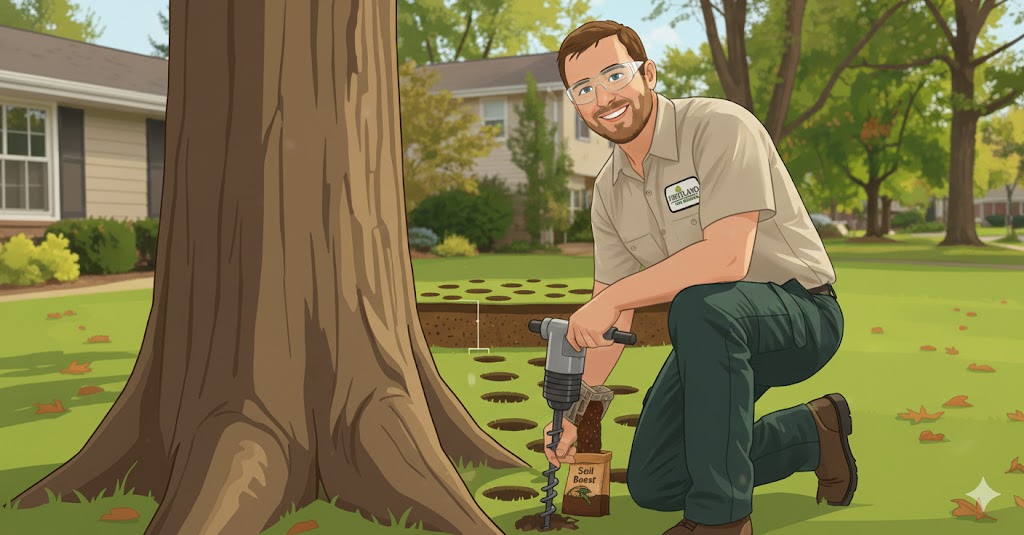
How Vertical Mulching Works
Our arborists use specialized equipment to drill a grid of holes throughout the critical root zone (from the trunk out to the drip line). These holes are typically 2 to 4 inches wide and extend 8 to 12 inches deep—the depth where most crucial feeder roots are located.
Once the holes are created, they are filled with a specialized mixture of organic compost and soil amendments. We never use gravel or sand, which can worsen compaction over time.
The Three-Fold Benefits of the Technique
Vertical Mulching offers benefits that are immediate and long-lasting, providing a healthy environment for your tree's roots to flourish:
- Soil Aeration: The process physically breaks up dense, compacted soil layers, immediately increasing the air space and oxygen supply to the roots.
- Enhanced Drainage: The deep channels act like mini-reservoirs, allowing water to penetrate the soil quickly, preventing surface runoff and waterlogging.
- Nutrient Delivery: The organic material we introduce provides a steady, slow-release source of nutrients that encourage new, healthy root development directly into these improved pockets.
Is Vertical Mulching Right For Your Tree?
If your tree is showing signs of decline—such as sparse canopy, undersized leaves, premature leaf drop, or if the soil around its base feels hard and dry—it is an excellent candidate for this service. Vertical Mulching is often paired with Deep Root Fertilization to maximize nutrient uptake in the newly aerated soil.
Request a Root Zone Assessment