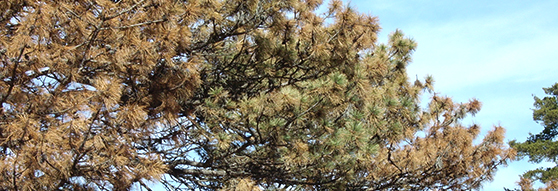

Pine Wilt Disease (PWD) is a severe threat to Scots Pine and Austrian Pine, which are common in Michigan landscapes. Unlike slower diseases, PWD is caused by the Pinewood Nematode (a microscopic worm) and can kill a mature tree in a single season. The key to management is rapid identification and preventative action.
Understanding the Silent Killer
The Pinewood Nematode (*Bursaphelenchus xylophilus*) is spread by the Pine Sawyer Beetle (*Monochamus spp.*). The beetles carry the nematodes when they emerge from an infected tree in the spring and introduce them into a healthy tree through feeding wounds. Once inside, the nematodes multiply rapidly, clogging the tree's resin canals and water-conducting tissues, which causes the rapid and irreversible wilting.
Key Symptoms of Pine Wilt
Pine Wilt progresses quickly, often appearing during the heat of late summer and fall. Look for these signs:
- Rapid Needle Discoloration: Needles turn from green to grayish-green, then tan, and finally brown in a short period (weeks to months). This usually starts at the branch tips or the top of the crown and quickly spreads to the entire tree.
- Needles Cling to the Tree: Unlike many other pine issues where dead needles drop, those killed by Pine Wilt often remain attached to the dead branches for months.
- Reduced Resin Flow: If you cut into an affected twig, the wood will be dry and brittle, lacking the sticky sap/resin characteristic of a healthy pine.
- Entire Tree Death: The most distinctive sign is the swift decline and death of the entire pine tree, usually within one growing season after symptoms appear.
🚫 The Critical Management Principle: No Cure
Once a pine tree is symptomatic and confirmed to have Pine Wilt, it cannot be saved. The focus shifts entirely to sanitation to prevent the disease from spreading to nearby healthy pines.
Professional Management & Prevention
-
1. Timely Removal and Destruction (Sanitation)
This is the most crucial step. Infected trees must be removed and destroyed before May 1st to eliminate the breeding ground before the Pine Sawyer Beetles emerge and fly to new trees. This includes:
- Cutting the tree down to the stump.
- Chipping, burning, or burying all wood debris. Do not keep the wood for firewood or store it near other pines, as the beetles can still emerge.
-
2. Preventative Trunk Injections (For High-Value Trees)
For healthy, high-value pine trees (especially Scots or Austrian varieties) located near infected trees, a systemic nematicide (like Abamectin) can be professionally injected into the trunk. These treatments are preventative only and must be done by a certified arborist and repeated every one to three years to maintain protection.
-
3. Cultural Practices & Resistance
Keep your pine trees healthy by watering during periods of drought and using proper mulching techniques to reduce stress. When planting new trees, consider resistant species such as Eastern White Pine, Jack Pine, or switching to non-host conifers like Spruce or Fir.