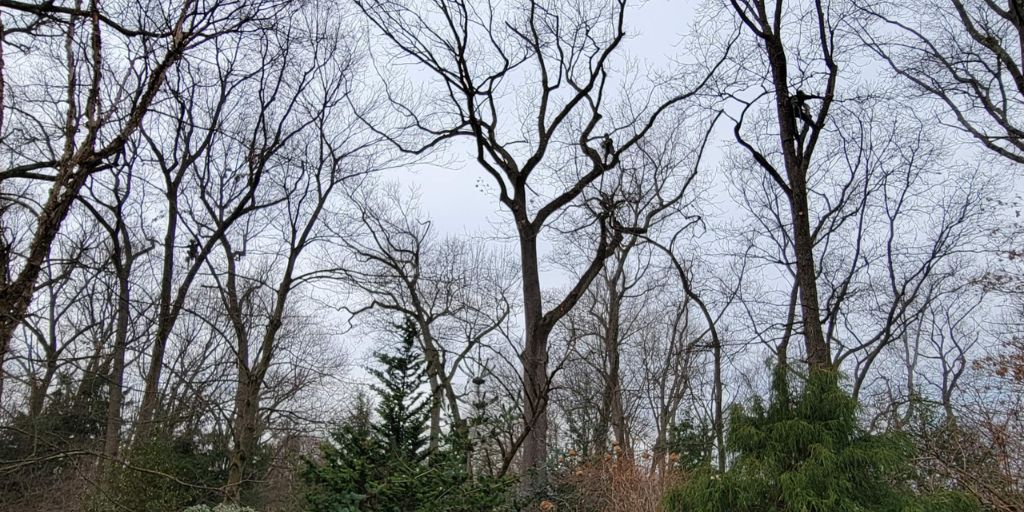

While many people associate tree trimming with spring or summer, the period between late fall and early spring—when your deciduous trees are dormant—is actually the ideal time for most structural pruning. This practice, known as Dormant Pruning, is key to promoting tree health, safety, and vigorous growth.
Why We Recommend Dormant Pruning
Pruning trees when they are dormant offers three major advantages that are critical for their long-term survival in Southeast Michigan:
1. Maximizing Growth and Energy
During winter, a tree's energy reserves are stored in the roots and trunk. When dormant pruning is performed, the tree doesn't waste energy trying to heal or maintain the removed limbs. Instead, all that reserved energy is directed toward maximizing new growth on the remaining limbs as soon as spring arrives. This leads to healthier, stronger overall growth.
2. Disease and Pest Prevention
Many common tree diseases (like Oak Wilt) and pests (like the Elm Bark Beetle) are spread by insects that are active during the warmer months. When you prune during the dormant season, these insects are inactive, and the chance of introducing pathogens into fresh wounds is drastically reduced.
3. Optimal Structural Assessment
Without leaves obstructing the view, our arborists can clearly see the tree’s entire framework. This allows for precise identification of:
- Hazardous defects like dead, damaged, or weak branches.
- Structural flaws such as crossing or rubbing branches that cause wounds.
- Weak branch attachments and poor growth patterns that need correction.
❄️ The Ideal Window for Dormant Pruning
The best time for dormant pruning is generally from late November to mid-March, well after the leaves have dropped and before buds begin to swell in the spring.
What Trees Benefit Most from Winter Pruning?
Most deciduous shade trees, including Maple, Ash, Oak (especially important to prune in winter!), and London Plane trees, should be pruned during the dormant season. Pruning young trees during this time is essential for establishing strong, correct growth habits for decades to come.
Note: There are exceptions! Spring-flowering trees (like Lilac, Cherry, and Magnolia) should generally be pruned immediately after they finish flowering, or you will remove the buds for next season.