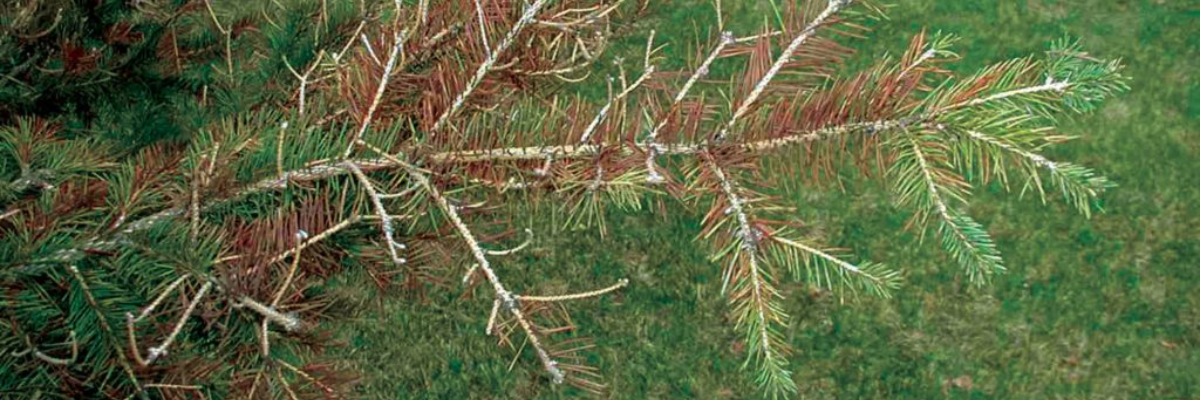

Spruce trees, especially Colorado Blue Spruces, are popular landscape choices in Southeast Michigan, but they are highly susceptible to Needle Cast Disease. This fungal infection causes needles to prematurely turn brown and drop, often thinning the tree dramatically and severely impacting its aesthetic appeal.
Identifying the Problem: Symptoms of Needle Cast
Needle cast is typically caused by the fungi Rhizosphaera kalkhoffii or Stigmina lautii. The damage usually begins on the lower branches and progresses upward, giving the tree a distinct, ragged appearance.
- Color Change: Needles (usually one-year-old needles or older) turn a purplish-brown color in the late winter or early spring.
- Needle Drop (Cast): These discolored needles drop prematurely during the summer and fall.
- Progression: The disease starts on the innermost needles of the lower branches, slowly moving outward and upward, leaving the branch tips with only the current season's growth (green needles).
- Fruiting Bodies: Small black dots (fruiting bodies) can often be seen in neat rows along the affected needles—a definitive sign of the fungus.
💧 Prevention Fact: Moisture is the Enemy
The fungus thrives in cool, wet conditions and high humidity. Dense plantings and poor air circulation create the perfect environment for the disease to spread.
Our 3-Step Management Plan
Managing Needle Cast is a long-term commitment that focuses on cultural practices and targeted fungicide application.
-
Pruning for Air Circulation
We selectively prune the lower, heavily infected branches and thin the canopy of dense trees to improve air flow. This reduces the humidity around the needles, slowing the spread of the fungus.
-
Targeted Fungicide Applications (Spring/Early Summer)
Chemical control requires precise timing. We apply a preventative fungicide (such as a copper-based product) as the new needles begin to emerge in the spring, and often a second time three to four weeks later. This protects the new growth from infection.
-
Cultural Practices (Homeowner Role)
We advise homeowners on proper watering (avoiding overhead sprinklers that wet the needles) and selecting proper planting sites (full sun, good drainage) to reduce moisture and stress.
If left untreated, Needle Cast will significantly weaken the spruce tree, leading to severe branch loss and potentially making it vulnerable to secondary pests like the Spruce Spider Mite.